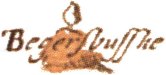
This shows the frequency with which the Beggars Bush appears as a phrase in printed works which have survived and been digitised. The early spike includes Anger, Porter, and Marprelate, but the lull afterwards shows the absence of the phrase from the coney-catching pamphlets which followed. I think the small spike from c.1620 and the big spike and continued higher figures after 1660 are largely the result of the performance and then publication of the play when the theatres re-opened. With the sudden drop around 1690 arising from the Glorious Revolution and the arrival of King William of Orange. The database ends at 1700.
This is courtesy of the The EarlyPrint Lab which offers a range of tools for the computational exploration and analysis of English print culture before 1700. They say they apply these tools to a corpus of more than 60,000 early English printed documents, roughly 1.65 billion words. They intend the Lab as a provocation, not a finished toolkit. By exposing the corpus of early printed texts at scale we hope to defamiliarize familiar texts and invite exploration of unfamiliar ones. The tools and visualizations offer perspectives on the corpus that invite users to probe early English discursive history in ways that complement the search capabilities of EEBO-TCP and the Oxford English Dictionary (and LEME – the brilliant but sadly no longer available Lexicons of Early Modern English.
Try it for yourself.
Posted: October 20th, 2025 | Filed under: Writers, Uncategorized | | No Comments »
5. Gaming, Is the High-Way to Beggars-Bush; a bewitching vanity, that will not suffer a man to keep his money in his pocket, without putting it to the hazard of a Throw, whether it shall continue his own or be anothers,
Such is the advice given by the anonymous author of the single sheet pamphlet ‘The Art of Thriving or, the way to Get and Keep Money: Being, a Seasonable Caution to Slothful Drones and Prodigal Spend-thrifts: Containing sundry Excellent Rules and Observations for Promoting Good-husbandry, and Banishing Idleness and Profuseness, the certain Parents of Poverty: Principally intended for an Admonition to Youth, but necessary to be practiced by all persons in these hard Times; and to be set up in every Family.’ London: Printed for J. Coniers, and are to be sold at the entrance into Popes-head Alley, next Lombard-street, 1674.
Other causes were to be gaudy in apparel, a Liqourish Touch or Extravagant Diet, Drinking (or as they name it) Good Fellowship, Courting of women and after Gaming, Suretyship and trusting to servants. The pamphlet also includes a useful table of weekly, monthly and annual expenses or wages, encouraging long terms saving and anticipating Charles Dickens’s famous dichotomy of happiness and misery.
Wing (2nd ed., 1994) / A3795
EEBO
Posted: October 20th, 2025 | Filed under: Writers, Uncategorized | | No Comments »
In
the play ‘The Beggars Bush’ the election of
Clause as the King of the Beggars in Act II Scene 1 is celebrated with a song sung by “orator” Higgen. The song was reproduced as a seperate text in many collections of songs. It is generally ascribed to John Fletcher. Much of the beggars material in
‘The Beggars Bush’ was taken from the rogue literature of the late sixteenth and early seventeeth century. However, the source for the song is a much earlier and more respectable text –
The Colloquies’ of Desiderius Erasmus, the
“Prince of Christian Humanists”
Read the rest of this entry »
Posted: December 28th, 2014 | Filed under: Writers, The Play | Tags: John Fletcher, John Taylor, Literary, The Play, beggars | No Comments »
“Beggar’s Bush is no place for a woman, much less a lady.”
“Old Badmin is a decently dressed rogue, and does the devil’s work in our village so cleverly, it takes two honest men to lay hold of him in the act and deed of villainy. Card sharper, poacher, retailer of rum and gin without a licence, and many a sober man’s sober son has he ruined and sent across seas, having picked his bones and used him for a cat’s paw. All last winter his small farm, Beggar’s Bush, was a rendezvous for the scum of the parish, to-night is this, year’s inauguration ; a first and last carousel.”
“Amongst those turf bogs no man of your father’s weight could find a footing. They skirt Beggar’s Bush ; there, yonder, is the farm, more than one path leads from it to St. Cuthbert’s. None but fools or madmen would try the moors to-night, even with an experienced guide. A slip into these treacherous dykes, and the strongest traveller fares the worst; his frantic, efforts do but engulf him the more surely.”
“Beggar’s Bush deserted, got a tenant after some time, a quiet, sober man, seemingly intent upon digging and drying, and re-claiming the land by a system of drainage. The farm was his own, he said, and had been let to a very bad tenant by his agents, determining him to see after the property himself.”
I hesitate to include this tedious execrable novel in the list of literary references – I do so for completeness, not as an encouragement to read it.
The usage of Beggars Bush is characteristic of the imagination expended by the author. As well as a bad man called Badmin, the book includes Constable Duffer and a villain called Marmaduke Chatterson. He, inexplicably, is also the husband of the heroine’s nursemaid Prudence, before his supposed death on the Lusitania, reappearance, further disappearance mysteriously connected with the heroine’s father drowning in a bog and deathbed repentance in a workhouse. Read the rest of this entry »
Posted: June 26th, 2012 | Filed under: Writers | Tags: Literary | No Comments »
A Begger haunts, where he good Dole receives
The Nigard stoppes, for he, his prayers, deceaves,
Your Liberall Charrity from open Palmes
Makes us this confident to Aske your Almes
The Beggers have their Motives: Soe have wee
They crye their loss of Limbes, Age, Insanitiee
Theise our Infant days w’yee, yet: our Playes
(Though wee act none but such as got the Bayes)
Are Old: our habites too are meane: the same
Our action maimed, decrepit, feeble, Lame,
All movers of compassion: Let that fall
(as usuill) & your Charity mends all
For as A generall Rule wee ever make it
Not what? Or how we Act? But how you take it.
This prologue to Fletcher & Massinger’s play The Beggars Bush (1622) survives in one manuscript copy in the notebook of John Clavell, with notes, copy letters, epigrams and remedies. They were probably written by Clavell in 1637 when he was in Ireland. Read the rest of this entry »
Posted: May 24th, 2012 | Filed under: Writers, Speculations, The Play | Tags: Ben Jonson, Dublin, Literary, Philip Massinger, The Play | 1 Comment »
The Oxford English Dictionary gives under
Beggars:
8. Special combinations. . . “beggar’s-bush, a bush under which a beggar finds shelter (name of ‘a tree near Huntingdon, formerly a noted rendezvous for beggars’ – Brewer), fig. beggary, ruin;”.
This is taken from E. Cobham Brewer’s Dictionary of Phrase and Fable (1868 and all editions until recently when the entry was dropped) which gave;
“Beggars Bush. To go by beggar’s bush, or Go home by beggar’s bush – i.e. to go to ruin. Beggar’s Bush is the name of a tree which once stood on the left hand of the London road from Huntingdon to Caxton; so called because it was a noted rendezvous for beggars. These punning phrases and proverbs are very common.”
This is partly true and partly false – perhaps more correctly this was false when it was first published, but through the influence of these two reference works has become common usage. It has been applied as a post facto explanation for the existence of the place name — see for example Donnybrook, Dublin and the histories of Dublin). Read the rest of this entry »
Posted: October 18th, 2011 | Filed under: Writers, Speculations | Tags: Beddington, Godmanchester, Guy Miege, Henry Porter, Huntingdon, Isabel Plumpton, John Cleveland, Literary, Robert Greene, Thomas Fuller, Twelve Ingenious Characters, anthologies, naming story | No Comments »
It is fairly well known that the poet Samuel Taylor Coleridge liked the play by Fletcher and Massinger (though then regarded as by Beaumont & Fletcher). In Table Talk (17 February 1833) he was recorded as saying ”In the romantic drama Beaumont and Fletcher are almost supreme. Their plays are in general most truly delightful. I could read the Beggar’s Bush from morning to night. How sylvan and sunshiny it is!” However, he expressed reservations about their plots, which he described as “wholly inartificial” and lamented that no “gentleman and scholar can he found to edit these beautiful plays!” Read the rest of this entry »
Posted: September 3rd, 2011 | Filed under: Writers, Speculations, The Play | Tags: Douglas Kinnaird, The Play, William Godwin | No Comments »
Philip Henslowe provides a link between the area of a cluster of early Beggars Bush place names in Sussex and many of the early authors who used Beggars Bush in their works. He is best known for his “Diary”, which is the main primary source for the day to day workings of Elizabethan theatre. He was an entrepreneur with wide business and family links in London and Sussex. I cannot show that he ever used the phrase, but he must have been aware of it. Read the rest of this entry »
Posted: June 27th, 2011 | Filed under: Writers, Speculations, The Play | Tags: Brian Twyne, Henry Chettle, Henry Porter, John Day, John Fletcher, Philip Massinger, Robert Greene, The Play | No Comments »
In 1573 “the Old Shore” of South Dublin continued to Townsend Street, then called Lazey or Lazar’s Hill (also Louseyhill, Louzy Hill and Lowsyhill) from the leper hospital. This is too far away to have any direct connection with Beggars Bush at Donnybrook.
I have encountered an article by Sean Donnelly which speculates that connects the two sites in Dublin through Poor Robin’s An Almanack of the old and new fashion (1694) which says “Since the King of the Beggars was married to the Queen of the Sluts at Lowzy-Hill near Beggars-Bush, being most splendidly attended by a ragged Regiment of Mumpers.” I do not believe this has anything to do with Dublin. Read the rest of this entry »
Posted: May 30th, 2011 | Filed under: Places, Writers | Tags: Donnybrook, Dublin, False Trails, Ireland, Poor Robin, Winstanley, beggars, proverb | No Comments »