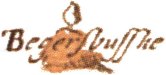
A Lease dated 12 May 1790 of minerals rights (lead, copper, iron ores, coal and calamine) under Knowle Field refers to the adjoining wood, Knowle Paddock, and Beggars Bush Close in Henbury.
The Bristol Mercury, 16 Dec 1837, reported a meeting of the Trades at the Tailors Hall, Broad Street to support Mr Berkeley the “radical” candidate against a petition by the Tories for his removal on the basis his agents had offered bribes to the electors. Mr Sennington, “rising to move the first resolution” and remarking on the strength of the trades in Bristol referred to the signatories to the Tory petition;
“First there was Mr Bush: perhaps they all recollected a large tree on Durdham Down, which was called the Beggars’ Bush; now he could imagine a tall gigantic individual, lowly stooping to each passenger as he passed by soliciting a subscription in aid of the petition fund.”
Read the rest of this entry »
Posted: May 21st, 2011 | Filed under: Places | Tags: Bristol, Gloucestershire, Henbury | 1 Comment »
The Tree
This is location in which there was a bush, or tree. The Enclosure Award dated 1820 refers to “the place called Beggars Bush” on the Leigh Turnpike Road. The Enclosure Map shows “Beggars Bush” at the junction of what is now Beggars Bush Lane, then called “Leigh Public Road” with the road from the river crossing at Rownham towards Leigh Abbotts, with Leigh Woods on the eat. It has the symbol of a tree on the side of the road. Ordnance Survey maps available from the 1880s onwards show the name across the junction.
The tree is referred to in a letter from Sir John Hugh Smyth in 1799 when he recounted the Perambulation of the parish boundaries of Long Ashton, during which there are several references to Beggars Bush because one Fowler of Leigh Abbotts had the temerity to dispute Smyth’s recollection of the boundary. Smyth recalled a Perambulation conducted in 1758 which he had attended. It appears the “L A” he recalled was no longer visible in 1799.
“I claimed the Manor of Ashton to the centre of the stone ridge to a stone a little above Beggars Bush . . . I informed them that I remembered L. A. cut into the lower side [of] that bush . . . We proceeded to a yew tree leading towards Stokeley, where a psalm was sung, and then proceeded to the corner of Leigh Wood.”
The Braikenridge Collection (Somerset Heritage Centre A/DAS/1/1/2) has a transcription dated 1835 of lines allegedly on a brass plate once nailed to this Beggars Bush, which also records that the nails & a corner of the brass plate were still to be seen.
“Welcome thou weary stranger, rest at will,
Under my shades, the Hawthorn of the hill.”
Joseph Leech wrote in Rural Rides of the Bristol Churchgoer (1847) about a walk to Abbott’s Leigh on 1 March 1845;
“The Reader, who has often walked to Leigh, will surely recollect Beggars’ Bush, the ancient whitethorn on the roadside, once the shelter of the mendicant pilgrim from the noonday sun, and now supported by a friendly prop in its venerable and declining old age”.
Bristol Mercury 27th August 1853 reported.
During the night of Thursday our city and neighbourhood were visited by one of the most severe gales of wind . . . that has been experienced for many years. At Leigh, the storm did considerable damage, throwing down several fine trees. Numbers, we are sure, will regret to learn that “the Beggar’s Bush ” or “half way tree,” as it was termed, so familiar to everyone who has ever crossed Leigh-down, fell a victim to the fury of the gale. Although its sylvan beauties had long gone to decay and its venerable trunk was sapless and shrunken, yet it stood, as it were, a link between the past and present centuries, as familiar to the urchin school-boy as to the oldest man amongst us.
A later article in 1865 laments the disappearance of the last fragment.
There was also a ‘Hangman’s Oak’ nearby, which I have not been able to locate.
Beggars Bush Lane and fields
Beggars Bush Lane (B3129) runs east/west along the northern boundary of the Ashton Court estate from the villages of Failand and Long Ashton. It is likely that the name has been extended from the tree to the road, and to the general area.
The estate was a deer park and is now a public park and playing fields. The area is flat enough to be used for the Clifton College playing fields and by the US First Army when they were based at the college during WWII as a temporary airfield “Beggars Bush Field”.
The Long Ashton Enclosure Act (53 George III cap.67) was passed to permit the Smyth and Gore Langton families to quarry the outcrop of carboniferous limestone beneath the downs, at a time when similar acts were being passed for large parts of the Mendip Hills. This was expected to be more profitable than agriculture.
In July 1842 the Royal Agricultural Society held “a trial of rustic skill” (a ploughing contest) in the area. The reports of that support a derogatory source for the place name. Many reported problems, the fullest saying “it was not considered a very favourable spot as it turned up stony, and in some instances could hardly admit of ploughing to the requisite depth” (4 inches).
The character of the area
There are reports in the nineteenth century of gypsies and other travellers in Leigh Woods, and possibly on the wide verges of Beggars Bush Lnae.
At the Long Ashton Petty Sessions Richard Pitt, a tramp, was charged with “insulting” females in Beggars Bush Lane, and sentenced to two months hard labour. This was probably indecent exposure. (Western Daily Press Sat 4th Aug 1888).
J Coleman a correspondent to Notes & Queries for Somerset and Dorset Vol. III, 1890, p.11 wrote;
A writer in the Daily Bristol Times and Mirror of 18th August 1891, complains of the disgraceful state of a road, commonly known as “Beggar’s Bush Lane” in the Long Ashton District, and apparently situated in that parish. He evidently connects the word with beggars, for, describing the darkness of the road at night caused by overhanging trees, he says, ”a more unpleasant place to encounter a resolute and importunate tramp I cannot imagine.”
A George Kimberley appeared for stealing an umbrella and by from Mr Lockyer, a hairdresser of Merchants Parade, Hotwells of stealing his barber’s pole, and leaving it in the plantation of Sir Greville Smyth at Beggars Bush. Kimberley was also accused of other thefts from churches, chapels, shops and public houses. (Bristol Mercury 5 June 1869)
The origin of the name
In his Collectanea (Bristol & London 1902) the antiquary V. S. Lean, who was educated and lived in Bristol, noted the Godmanchester site as a “well-known tree” and the literary usage of a “taunting prophecy of poverty” but went on to say that “The primary meaning was a rendezvous for beggars at the bifurcation of two roads. Such a one exists on the Leigh side of the river Avon, opposite Clifton, and it is still called “Beggar’s Bush Lane”. I discount this as support for the rendezvous of beggars as it is clearly based on and reproduces the errors made by E Cobham Brewer and the OED, though it is notable that Lean was aware of the earlier meaning.
I also discount the derivation of the name from “Burning Bush, because as the sun rises in the sky the leaves look red” suggested in one blog which says that the location was an astronomical sighting point on a ley line.
The evidence shows that this was a point location, which has been extended to a much wider area. That is not unusual. But unusually there was a bush. And there were travellers nearby in the nineteenth century. It is on a parish boundary. So the location does fit Phil Quinn’s “liminal places” theory. Though whether any of the Smyths of Ashton Court were tolerating beggars on the edge of their deer park before 1750 is a moot point – I suspect not. The estate was acquired by the Smith family in 1545. Hugh Smith was a pugnacious argumentative merchant, and the last person likely to tolerate beggars in the vicinity of his estates. He and his descendants certainly didn’t tolerate poachers. In 1600 the city of Bristol employed a “beadle of beggars” who was supplied with whips and a cage. Against that there is also clear evidence of poor land, or it may have been an incidental naming – a distinctive Hawthorn bush at the top of a slope. I can’t discount the possibility that there was once a beggar.
It is on the road to Abbotts Leigh, a priory dissolved in 1639 and granted in 1641 to Edward VI by Paul Bush the Bishop of Bristol (1542 to 1554) which might have provided/prompted the use of the name but that is just speculation.
Could the name be a transfer from Henbury where it was recorded in 1790? Young Sturge of Bristol was the surveyor the Long Ashton and umpire for Henbury Enclosure Award and would have been working on both simultaneously.
Sources
Bristol Archives AC/PL/159 Enclosure Award. Long Ashton. Young Sturge and John Brown Commissioners. Map 20 May 1820. Bound with copy of Act, 1813.
Way, L J Upton (1913) An Account of the Leigh Woods, in the Parish of Long Ashton, County of Somerset. Transactions of the Bristol and Gloucestershire Archaeological Society vol 36, pp. 55-102.
Williams, M The Enclosure and Reclamation of the Mendip Hills, 1770-1870, AgHR Vol. 19, No. 1 (1971), pp. 65-81
Bettey, J.H. Hugh Smyth, of Ashton Court 1530-1581: Somerset Landowner, Justice of the Peace and trouble-maker, SANHS, vol.136, 1992, p.111,
Bantock, A. Early Smyths of Ashton Court, Malago Society, Bristol, 1982.
Beggars Bush Field – UK Airfield Guide
Acknowledgements
Thanks to Steve Taylor of the Long Ashton Local History Society for the Perambulation and other references.
OS Grid
ST541721
Posted: April 10th, 2011 | Filed under: Places | Tags: Bristol, Failand, Long Ashton, Victor Canning | No Comments »