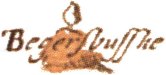
Henry Porter’s use of the literary phrase Beggars Bush is consistent with other early literary examples. It occurs in a play, now, like the author, largely forgotten. Like most other early writers he makes use of the vernacular, especially proverbs. There is some evidence linking Porter and his play to an area where there are early examples of the place name. His life and death link him to other writers who used the phrase, one of whom probably killed him.
Read the rest of this entry »
Posted: March 27th, 2011 | Filed under: Writers | Tags: Ben Jonson, Brian Twyne, Henry Chettle, Henry Porter, John Day, Literary, Marprelate Tracts, Oxford, Philip Henslowe, proverb | No Comments »
A Wonderfull … Astrologicall Prognostication (1591) is a pamphlet by “Adam Fouleweather Student in Asse-tronomy” which has been attributed to Thomas Nashe (“unconvincingly” according to DNB). It was one of a trio of mock prognostications, the others by ‘Francis Fairweather’ and ‘Simon Smellknave’ do not survive. It ridicules the popular prognostications that were published with almanacs. It claimed it was “Discovering such wonders to happen this yeere, as neuer chaunced since Noes floud. Wherein if there be found one lye, the author will lose his credit for ever.”
Read the rest of this entry »
Posted: March 27th, 2011 | Filed under: Writers | Tags: Ben Jonson, Christopher Marlowe, County Offaly, Godmanchester, Henry Chettle, Martin Marprelate, Poor Robin, Robert Greene, Thomas Nashe | No Comments »
“Newes from Jack Begger under the Bushe, with the advise of Gregory Gaddesman his fellow begger touchinge the deare prizes of corne and hardnes of this present yere” is the title of a pamphlet entered in The Stationers’ Register for 28 December 28, 1594, licensed to R. Jones.
Read the rest of this entry »
Posted: March 26th, 2011 | Filed under: Writers | Tags: Adam Foulweather, Gregory Gaddesman, Jack Begger under the Bushe, John Taylor, Literary, Poor Jack, Thomas Nashe, bush | No Comments »
A Survey of the king’s lordship or manor of East Greenwich by Samuel Travers (1695) shows “Beggers Bush” as a feature south of Greenwich Park. The words appear east of what is now Tranquil Vale, just south of the crossroads with Hare & Billet Lane, next to which is it says “A Cross”. It appears to at the point where the boundary between Greenwich and Lewisham meets the road.
Read the rest of this entry »
Posted: March 26th, 2011 | Filed under: Places | Tags: Blackheath, London, Map | 1 Comment »
The Wits, or Sport for Sport a collection of drolls (short plays) included one based on Act II Scene 1 of The Beggars Bush called “The Lame Common-Wealth”. This was adapted for informal and small scale performance anywhere. It may have been important in the distribution of Beggars Bush as a place name. At the very least it is an intriguing byway and example of the remarkable entrepreneurial career of the publisher Francis Kirkman. The frontispiece is widely reproduced, and inaccurately described, but demonstrates the popularity of the character Clause from the play & droll.
Read the rest of this entry »
Posted: March 20th, 2011 | Filed under: Writers, The Play | Tags: Ben Jonson, Clause, Francis Kirkman, John Fletcher, Literary, Performance Chronology, Philip Massinger, Publishing Chronology, The Lame Commonwealth, The Play, The Wits | No Comments »
Saxton’s county maps were the first national cartographic survey of England. They, and later maps based on them, were very important for the preservation and distribution of the place name & literary phrase Beggars Bush. They may have contributed to the mistaken connection of beggars with the site at Godmanchester near Huntingdon.
Read the rest of this entry »
Posted: March 20th, 2011 | Filed under: Writers | Tags: Christopher Marlowe, Christopher Saxton, Godmanchester, Huntingdon, Huntingdonshire, bush, early sites, maps, proverb | No Comments »
“The Beggars Bush” is a play written by John Fletcher and Philip Massinger in 1622, but commonly included in the “Beaumont and Fletcher” canon. Through performance, print, characters and development of the original text it was likely to have made a substantial contribution to the survival and distribution of the literary phrase. As to the eponymous Beggars Bush itself the play is vague. It is a meeting place for the beggar characters, some of whom, it is revealed, are not beggars at all. It does not attempt to portray a real location – the play is not set in England but in and around Bruges.
Read the rest of this entry »
Posted: March 20th, 2011 | Filed under: Writers, The Play | Tags: Ben Jonson, Clause, Dutch, Francis Beaumont, Francis Kirkman, Henry Chettle, Izaak Walton, John Day, John Fl, John Taylor, Literary, Londons Ordinary, Performance Chronology, Philip Henslowe, Philip Massinger, Publishing Chronology, The Lame Commonwealth, The Play, beggars, geuzen | No Comments »
This broadside ballad “To a pleasant new tune” survives in a variety of editions. The English Broadside Ballad Archive has two dated from 1619-1629 and 1630, while the Bodleian Library Broadside Ballads lists three further versions dated between 1674 and 1679. All of these include similar text which lists places, mainly hostelries (ordinaries) linked with the characters of the people who used them. Notably it is the spendthrifts who go to Beggars Bush – which is consistent with the literary usage of the phrase. It is sometimes connected to a song by Thomas Heywood, first published in 1608. For the full text see Londons Ordinarie.
Read the rest of this entry »
Posted: March 20th, 2011 | Filed under: Places | Tags: Ballads, John Taylor, London, Londons Ordinary, Robert Greene, Southwark, St Giles, The Oath, The Play, Thomas Heywood, derogatory, pubs | No Comments »
There seem to have been at least two Beggars Bush pubs in London; one in St Giles north of the Thames and one in Southwark south of the river. Beyond that little can be reliably said about the Southwark example. It was probably in Gravel Lane near Paris Garden. It was there in the reign of William III (1688-1702). It may have been in existence earlier during the period that Southwark was the centre of theatrical activity in London, and the home of writers such as John Fletcher. It is likely to be the inn referred to in the ballad London’s Ordinarie c.1685.
Read the rest of this entry »
Posted: March 19th, 2011 | Filed under: Places | Tags: John Fletcher, London, Londons Ordinary, Mockbeggars, Southwark, St Giles, pubs | No Comments »
Thomas Heywood is significant because he does not use Beggars Bush when he might have done, but he does associate beggars with bushes. This song appears to be the source or have a common source with, a later ballad Londons Ordinary which does refer to Beggars Bush.
Read the rest of this entry »
Posted: March 19th, 2011 | Filed under: Writers | Tags: Cambridge, Coldharbour, Francis Beaumont, Francis Kirkman, John Taylor, London, Londons Ordinary, Saxton, Southwark, St Giles, derogatory, pubs | No Comments »